
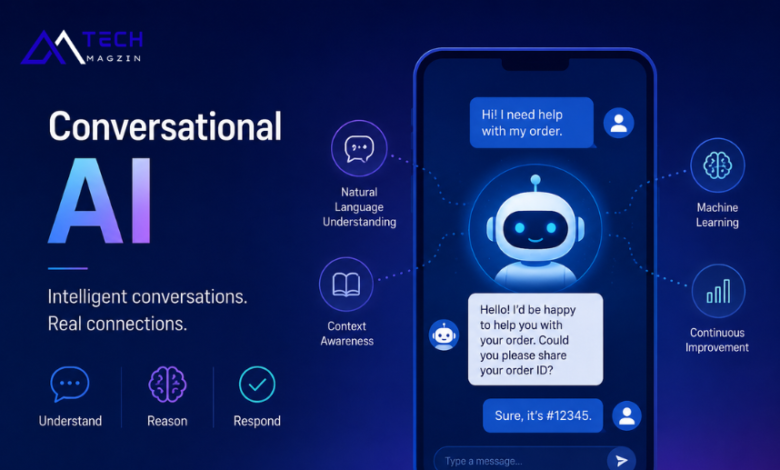
Many people search for conversational AI but are still unsure what it actually means or how it works in real life. You may have interacted with it already when talking to customer support bots, using voice assistants, or chatting with AI tools on websites. The problem is that most explanations online are either too technical or too vague.
Conversational AI is simply technology that allows computers to understand, process, and respond to human language in a natural way. In this guide, we’ll break down what conversational AI is, how it works, where it is used, and which platforms and tools are leading the industry today. We’ll also look at real business use cases so you can understand how companies actually apply it in customer service, healthcare, and automation.
What Is Conversational AI?
Conversational AI refers to systems that enable machines to communicate with humans using natural language. This can happen through text or voice.
In simple terms, it is what powers:
- Chatbots on websites
- Virtual assistants like Siri or Alexa
- AI customer support agents
- Voice response systems in call centers
The goal is to make communication feel human-like, even though it is automated.
At its core, conversational AI combines several technologies:
- Natural Language Processing (NLP)
- Machine Learning (ML)
- Speech recognition (for voice systems)
- Dialogue management systems
Together, these allow systems to understand intent, context, and respond intelligently.
How Conversational AI Works
Conversational AI works in a step-by-step flow:
- User Input – A person types or speaks a message
- Language Understanding – The system analyzes meaning and intent
- Processing – AI decides the best response using trained models
- Response Generation – A reply is created in text or speech form
- Learning Loop – The system improves over time using data
A key strength of modern systems is context awareness, meaning they can remember previous parts of a conversation instead of treating each message separately.
Types of Conversational AI Systems
Rule-Based Chatbots
These follow predefined rules and scripts. They are simple but limited.
AI-Powered Chatbots
These use machine learning to understand intent and improve over time.
Voice Assistants
These include systems like smart speakers and phone assistants that respond using speech.
Hybrid Systems
These combine rules + AI to balance accuracy and flexibility.
Conversational AI Platforms
There are many platforms that help businesses build conversational AI systems.
Some key categories include:
- Cloud-based AI platforms
- Open-source frameworks
- Enterprise chatbot solutions
- No-code chatbot builders
A well-known open-source framework is Rasa, which allows developers to build highly customizable chatbots with full control over data and logic.
Conversational AI Tools
Popular tools in this space help businesses automate communication and customer support.
Common features include:
- Pre-built chatbot templates
- NLP engines
- Integration with websites and apps
- Analytics dashboards
- Multi-language support
These tools are widely used by startups and large enterprises to reduce support costs and improve response time.
Conversational AI for Customer Service
One of the biggest use cases is customer service automation.
Companies use conversational AI to:
- Answer frequently asked questions
- Handle order tracking
- Process refunds or complaints
- Reduce wait times in support queues
The main benefit is 24/7 availability without needing human agents for every request.
A less discussed advantage is load balancing during peak hours, where AI handles sudden spikes in customer queries that would normally overwhelm support teams.
Conversational AI in Healthcare
In healthcare, conversational AI is used for:
- Appointment scheduling
- Symptom checking
- Patient reminders
- Basic medical guidance
It does not replace doctors but helps reduce administrative workload and improves patient engagement.
One unique insight is that healthcare chatbots often improve patient follow-up rates, especially for chronic conditions, because reminders feel more personal and consistent than manual systems.
Conversational AI Agents
AI agents are more advanced systems that can perform tasks instead of just answering questions.
They can:
- Book appointments
- Fill forms
- Send emails
- Pull data from databases
These agents are becoming a major trend because they move beyond conversation into actual task execution.
Conversational AI Use Cases
Common real-world applications include:
- E-commerce support chatbots
- Banking assistants
- Travel booking systems
- HR onboarding bots
- Educational tutoring systems
Each use case focuses on reducing human workload while improving user experience.
Conversational AI Examples
Some real-world examples include:
- Customer support bots on retail websites
- Banking apps that answer account questions
- Airline chat assistants for booking changes
- Voice assistants in smartphones
These systems are now deeply integrated into everyday digital experiences.
Enterprise Conversational AI
Large companies use enterprise-level conversational AI to manage:
- High-volume customer interactions
- Internal employee support
- CRM integration
- Data-driven customer insights
Enterprise systems focus heavily on security, scalability, and compliance.
Conversational AI Design
Good conversational AI is not just about technology—it’s about design.
Key design principles include:
- Keeping responses short and clear
- Understanding user intent correctly
- Avoiding robotic or repetitive replies
- Designing smooth conversation flows
- Handling errors gracefully
Poor design leads to frustration, even if the AI is technically advanced.
Unique Insight: Most Systems Fail at “Context Memory”
One major weakness in many conversational AI systems is short-term memory handling. They often forget earlier parts of a conversation too quickly, which breaks user experience. The best systems are now focusing on long-context memory so conversations feel more natural and continuous.
Another Insight: Emotion Recognition Is Emerging
Modern conversational AI is starting to detect emotional tone (frustration, urgency, satisfaction). This allows systems to adjust responses—for example, escalating angry customers to human agents faster or using calmer language when needed.
FAQ
What is conversational AI in simple words?
Conversational AI is technology that allows computers to talk and understand humans using natural language through chat or voice.
What are conversational AI platforms?
They are tools or systems that help businesses build chatbots and AI assistants without starting from scratch.
Where is conversational AI used?
It is used in customer service, healthcare, banking, e-commerce, education, and more.
What is the difference between chatbot and conversational AI?
A chatbot is a basic application, while conversational AI is the advanced technology behind intelligent chat systems.
Is conversational AI expensive?
It depends on complexity. Simple chatbots are cheap, while enterprise systems can be more costly due to integration and scaling.
Conclusion
Conversational AI is rapidly changing how businesses and users interact with technology. From simple chatbots to advanced AI agents, it is becoming a core part of customer service, healthcare, and digital automation. The real value lies in making communication faster, smarter, and more natural while reducing human workload. As the technology improves, future systems will feel even more human-like and context-aware.
