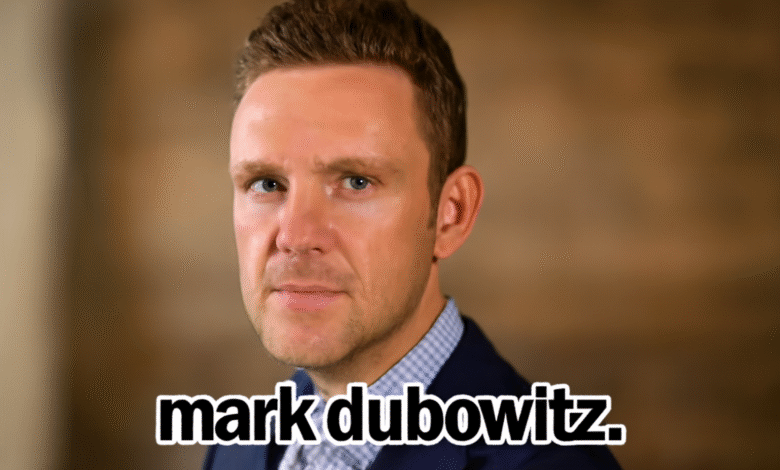
Mark Dubowitz is a prominent figure in U.S. foreign policy, particularly recognized for his expertise in economic sanctions and international security. As the executive director of the Foundation for Defense of Democracies (FDD), Dubowitz has become a leading voice in shaping strategies related to Iran, North Korea, and other nations posing security challenges. His career reflects a combination of in-depth research, strategic advocacy, and a commitment to protecting national and global interests.
Dubowitz’s work highlights the growing importance of economic instruments in diplomacy. While traditional foreign policy often focuses on military power, he emphasizes the strategic use of sanctions, trade restrictions, and financial oversight to influence state behavior without resorting to armed conflict.
Early Life and Education
Mark Dubowitz was born in Canada and later moved to the United States to pursue higher education. He earned a degree in economics, providing him with a strong foundation to analyze financial and geopolitical systems. Complementing this, he explored political science and security studies, gaining a comprehensive perspective on international relations.
His academic background helped him understand how financial tools could be leveraged for diplomacy. From early in his career, Dubowitz saw the potential of targeted economic sanctions as a way to address threats like nuclear proliferation and state-sponsored terrorism while minimizing direct military intervention.
Career and Achievements
Dubowitz’s most influential work has been at the Foundation for Defense of Democracies. Under his leadership, FDD has grown into a leading think tank, offering detailed research and actionable policy recommendations to the U.S. government and allied nations. The organization focuses on areas such as counterterrorism, Iran policy, nuclear non-proliferation, and global security strategy.
One of his landmark contributions is in the field of U.S. sanctions against Iran. Dubowitz advocated for measures that would pressure Iran to comply with international nuclear agreements while avoiding escalation into armed conflict. His work in this area has made him a frequently cited expert in congressional hearings, media interviews, and policy debates.
In addition to Iran, Dubowitz has addressed threats from North Korea, Russia, and other nations where economic leverage can play a pivotal role. His analyses often stress smart sanctions, carefully designed to target decision-makers while minimizing humanitarian impacts—a sophisticated approach that has influenced U.S. policy circles.
Influence on U.S. Foreign Policy
Mark Dubowitz is more than an analyst; he is a key shaper of U.S. foreign policy. Through FDD, he has provided detailed briefings, written policy papers, and offered expert commentary that guides lawmakers in creating effective international strategies. His expertise bridges the gap between academic research and practical policy solutions, making complex issues like sanctions and nuclear non-proliferation understandable for decision-makers.
Dubowitz’s recommendations often emphasize the strategic combination of economic, diplomatic, and legal tools to achieve foreign policy goals. This methodology has influenced debates on how the U.S. and its allies approach adversarial states, particularly in situations where military options are either impractical or undesirable.
Criticism and Controversy
Like many policy experts, Dubowitz has faced scrutiny. Critics argue that sanctions, even when targeted, can inadvertently affect civilians and create long-term economic disruptions. Others question whether sanctions alone can compel significant behavioral change in states like Iran or North Korea.
Despite these critiques, Dubowitz emphasizes evidence-based strategies, advocating for carefully calibrated sanctions that minimize unintended harm. His work invites debate, which underscores the complexity of international diplomacy and the careful balancing act required in modern policy-making.
Public Engagement and Media Presence
Dubowitz actively engages with both policymakers and the public. Through interviews, opinion pieces, and speaking engagements, he translates the often complex world of sanctions, international diplomacy, and national security into accessible insights. His presence in media outlets helps foster a more informed public discussion about pressing global issues.
By explaining how sanctions work and why they matter, Dubowitz contributes to a broader understanding of global security challenges. His ability to communicate nuanced policy topics effectively makes him a respected figure not just in Washington, but also among journalists, academics, and concerned citizens worldwide.
Personal Philosophy and Approach
At the heart of Dubowitz’s work is a belief in principled, data-driven policy. He consistently advocates for strategies that combine economic leverage, diplomatic engagement, and forward-thinking security measures. His approach emphasizes ethical responsibility, practical effectiveness, and the use of research to guide decisions.
Dubowitz also prioritizes strategic foresight, anticipating potential threats and designing policies that prevent escalation. Whether addressing nuclear proliferation or state-sponsored terrorism, he underscores the importance of proactive, informed policy to safeguard both U.S. interests and global stability.
Conclusion
Mark Dubowitz is a key figure in understanding how economic sanctions, diplomacy, and strategic planning intersect in modern foreign policy. His leadership at the Foundation for Defense of Democracies and his public engagement demonstrate the power of informed analysis in shaping global security.
For those seeking to understand the dynamics of Iran policy, nuclear non-proliferation, and U.S. sanctions strategy, Dubowitz offers invaluable insights. His work illustrates how one individual’s expertise can influence national and international decision-making.
For more in-depth explorations of policy influencers like Mark Dubowitz, Techmagzin continues to provide detailed analyses that uncover the forces shaping our world today.