The Dak injury has become one of the most talked-about topics in football conversations, sparking concern, debate, and endless speculation among fans and analysts alike. When a franchise quarterback goes down, the ripple effects extend far beyond the injury report. From team strategy to locker-room morale and even long-term career questions, everything suddenly feels uncertain.
In this article, we’ll take a deep, well-rounded look at the Dak injury—what happened, how serious it appears to be, how it affects the Dallas Cowboys, and what the road to recovery could realistically look like. Whether you’re a die-hard fan or a casual observer, understanding the full context helps cut through the noise and rumors.
Understanding the Dak Injury: How It Happened
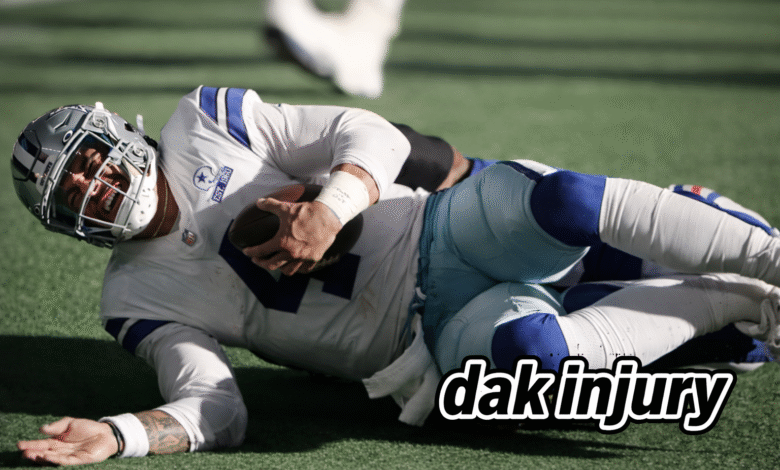
The Dak injury occurred during a high-intensity game where physical pressure and split-second decisions are part of every play. Like many quarterback injuries, it was the result of an awkward movement under pressure—an unfortunate reminder of how quickly a game can change.
Quarterbacks are especially vulnerable due to their role. They absorb hits from multiple angles, often while throwing or scrambling, which puts stress on joints, muscles, and bones. In Dak’s case, the injury was immediately noticeable, prompting medical staff to rush onto the field. That moment alone signaled that this was more than a routine knock.
Early reactions from teammates and coaches reflected concern, and fans watching live could sense the gravity of the situation. The silence in the stadium said everything.
Initial Diagnosis and Medical Evaluation
When news of the Dak injury first broke, details were limited. Teams often take a cautious approach, especially with high-profile players, releasing only confirmed information after imaging and specialist evaluations.
Medical assessments for injuries like this typically include:
- X-rays to rule out fractures
- MRI scans to assess soft tissue damage
- Functional movement tests to determine stability
While the exact severity of the Dak injury has been the subject of speculation, what matters most is how the injury responds to treatment. Not all injuries with dramatic on-field reactions result in long-term absence, but caution is always the priority—especially for a quarterback who is central to the team’s identity.
Why the Dak Injury Is Such a Big Deal
The significance of the Dak injury goes beyond one player missing time. Dak Prescott isn’t just the Cowboys’ starting quarterback; he’s the face of the franchise and the emotional leader of the team.
Here’s why the impact is so massive:
- Offensive Stability: Dak controls the tempo, audibles, and leadership on the field.
- Team Confidence: Players rally around their quarterback; his absence changes the emotional dynamic.
- Playoff Implications: Even short-term injuries can affect standings in a highly competitive season.
- Long-Term Investment: As a cornerstone player, protecting Dak’s health is a long-term priority.
When a team builds its system around one player, any disruption forces rapid adjustments.
How the Cowboys May Adjust Without Dak
If the Dak injury sidelines him for any length of time, the Cowboys will need to adapt quickly. Backup quarterbacks rarely replicate a starter’s skill set, so coaching staff must rework game plans.
Possible adjustments include:
- Simplifying passing schemes
- Relying more heavily on the running game
- Using shorter, quicker throws to reduce pressure
- Leaning on defense and special teams for field position
This shift often results in more conservative play-calling. While that can limit mistakes, it may also reduce explosive scoring opportunities. The coaching staff’s ability to adapt will be tested just as much as the roster depth.
Mental and Emotional Impact of the Dak Injury
Physical recovery is only part of the story. The mental side of the Dak injury is just as important.
Quarterbacks returning from injury often face:
- Fear of re-injury
- Hesitation in the pocket
- Reduced confidence in mobility
- Pressure to return quickly
Dak has previously shown strong mental resilience, which works in his favor. However, rushing back too soon can lead to setbacks. Balancing competitive drive with long-term health is one of the hardest challenges for elite athletes.
Recovery Timeline: What to Expect
Recovery timelines for injuries like this vary widely. Factors include:
- Severity of the injury
- Type of treatment (surgical vs. non-surgical)
- Player conditioning
- Rehab response
In general, recovery follows these stages:
- Acute care and rest
- Rehabilitation and physical therapy
- Football-specific training
- Practice clearance
- Game readiness
The Cowboys’ medical staff will likely err on the side of caution. Even if Dak feels ready, full clearance usually requires consistent performance in controlled practice settings.
Long-Term Implications for Dak’s Career
Whenever a quarterback suffers a notable injury, questions about longevity naturally arise. The Dak injury has led some to wonder whether it could affect his playing style or durability going forward.
While modern sports medicine has significantly improved outcomes, repeated injuries can influence:
- Mobility and scrambling ability
- Willingness to extend plays
- Offensive scheme preferences
- Career length
That said, many quarterbacks have successfully adapted their game post-injury, relying more on decision-making and timing than raw athleticism. Dak’s intelligence and experience could allow him to evolve without losing effectiveness.
Fan Reactions and Media Speculation
Few injuries generate as much online discussion as the Dak injury. Social media reactions have ranged from supportive messages to heated debates about the team’s future.
This level of attention can be both motivating and overwhelming for a player. Media speculation often fills gaps when official updates are limited, which can fuel anxiety among fans. It’s important to separate confirmed information from assumptions and remember that recovery is not always linear.
What the Dak Injury Means for the Season
Ultimately, the impact of the Dak injury on the Cowboys’ season depends on two things: how long he’s out and how well the team adapts in his absence.
Short-term injuries can sometimes galvanize a team, creating a “next man up” mentality. Longer absences, however, test depth, coaching flexibility, and mental toughness.
Regardless of outcome, this moment will likely define a key chapter of the season—one that players, coaches, and fans won’t soon forget.
Conclusion
The Dak injury is more than just a headline; it’s a pivotal moment that carries emotional, strategic, and long-term consequences. While uncertainty can be frustrating, it also opens the door to resilience, adaptation, and growth—both for Dak as an individual and for the Cowboys as a team.
As updates continue and recovery progresses, patience will be essential. One thing is clear: when Dak returns, his journey back will be closely watched and deeply felt across the football world.
For more thoughtful sports insights and in-depth analysis like this, stay connected with Techmagzin, where stories go beyond the surface and focus on what truly matters.