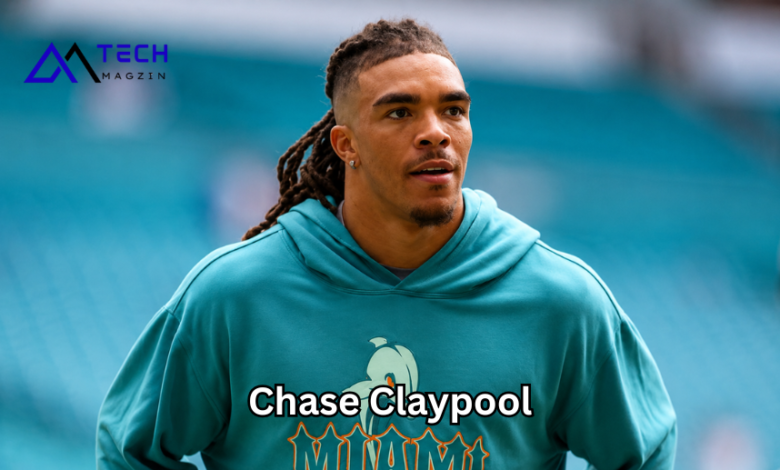
Chase Claypool is one of those NFL players whose career has sparked constant debate, curiosity, and search interest around terms like chase claypool stats, what happened to chase claypool, and whether he still has a future in the league. Once viewed as a breakout star with elite physical tools, his journey from a promising rookie to a struggling roster player has been anything but straightforward.
Early in his career, Claypool looked like a rare combination of size, speed, and red-zone dominance. But over time, inconsistency, role changes, and team transitions raised questions about his long-term place in the NFL. Fans now often ask about his current team, contract situation, trade history, and even whether a comeback is realistic.
This article breaks down Chase Claypool’s full NFL journey in a clear, experience-based way—covering his stats, team changes, performance shifts, and what the future might realistically look like for him. Instead of speculation, we focus on practical football context so you can understand exactly how his career has unfolded and where it stands today.
Early Career at Notre Dame
Before entering the NFL, Chase Claypool built his reputation at Notre Dame as a physically dominant wide receiver. Standing at 6’4″ with impressive athletic ability, he became a matchup problem for college defenses.
At Notre Dame, he was used in multiple roles:
- Outside receiver in vertical passing concepts
- Red-zone target due to size advantage
- Occasional special teams contributor
What stood out most was not just his size, but his ability to accelerate after the catch. Coaches trusted him in contested situations, which later influenced his draft profile.
One lesser-discussed insight: Claypool was not initially projected as a top-tier NFL receiver. His rise came from late physical development, meaning teams saw him as a “high upside project” rather than a polished star.
NFL Draft and Breakout with the Steelers
Chase Claypool was drafted by the Pittsburgh Steelers, where he immediately turned heads in his rookie season. His early NFL production created buzz around “what could be next” for his development.
With the Steelers, he showed:
- Strong rookie-year touchdown production
- Ability to line up in multiple receiver positions
- Red-zone efficiency beyond expectations
He quickly became a fan favorite in Pittsburgh due to highlight plays and his physical style of play.
However, one unique insight often missed in basic analysis is this:
Claypool’s early success was heavily system-driven. Pittsburgh’s offensive scheme at the time created structured opportunities that maximized his athletic strengths. When those structures changed later in his career, his production became less stable.
Trade to the Chicago Bears and Performance Shift
A major turning point came when Claypool was traded to the Chicago Bears. This move was intended to give him a larger offensive role, but it did not produce the expected results.
With the Bears, challenges included:
- Limited chemistry with quarterbacks
- Offensive instability and frequent scheme adjustments
- Reduced efficiency in route separation
Instead of becoming a featured star, Claypool struggled to find consistency.
This period significantly influenced public perception and led many fans to search for what happened to Chase Claypool or whether he had regressed.
A key overlooked detail here is usage mismatch:
He was often deployed in short or timing-based routes rather than the vertical role where he originally thrived.
What Happened to Chase Claypool?
The decline in production was not caused by a single factor. Instead, it came from a combination of issues:
- Role inconsistency across teams
- System changes that didn’t maximize his strengths
- Confidence and momentum disruption
- Increased competition for roster spots
Another important factor is positional expectation. Claypool was sometimes treated as a traditional wide receiver, but his most effective usage historically came when he was used as a hybrid vertical threat rather than a volume route runner.
This is one of the most important realities of NFL careers: talent alone is not enough—fit within a system matters just as much.
Current Team Status and Comeback Attempts
In recent years, Claypool’s NFL status has been uncertain. He has moved through multiple opportunities, including workouts and tryouts, such as reported interest from teams like the Packers during evaluation periods.
At this stage of his career, he is best described as:
- A depth/tryout-level receiver option
- A player seeking roster re-entry opportunities
- A candidate for short-term contracts or practice squads
This is why searches like chase claypool current team or is chase claypool still in the NFL remain common.
Unique Insight #1
One overlooked aspect of Claypool’s situation is that NFL teams now value special teams versatility heavily for backup receivers. Players who cannot contribute beyond offense often struggle to secure roster spots—even if they were once high draft picks.
Contract, Trades, and Career Movement
Claypool’s career has included multiple transitions, including:
- Entry-level rookie contract with Pittsburgh
- Trade-based movement to Chicago
- Short-term roster opportunities afterward
His trade value peaked early in his career, when teams still viewed him as a developing star. Over time, that value shifted from “future impact player” to “situational depth receiver.”
The NFL is highly reactive to recent performance, meaning past draft status quickly becomes less relevant than current production.
Playing Style: Strengths and Weaknesses
Claypool’s skill set has always been physically intriguing, but inconsistent in execution.
Strengths:
- Elite size and catch radius
- Strong deep-ball tracking ability
- Physical presence in contested catches
- Red-zone mismatch potential
Weaknesses:
- Route consistency
- Separation against top-tier cornerbacks
- Inconsistent game-to-game production
- Adaptation to different offensive systems
Unique Insight #2
A less-discussed factor is that Claypool’s athletic profile is best suited for low-volume, high-impact usage. When asked to run high-repetition route trees, his efficiency tends to drop. This makes him more of a situational weapon than a full-time WR1 or WR2.
Career Stats Overview
When people search chase claypool stats, they are often trying to understand whether his production matches his physical profile.
His career has included:
- Strong rookie production early on
- Declining consistency in later seasons
- Fluctuating snap counts depending on team situation
Rather than steady progression, his statistical profile reflects a “peak early, then adjustment period” trajectory.
NFL Comeback Chances
The question of a comeback is central to Claypool’s current narrative.
A realistic evaluation includes:
- He still has NFL-level athletic traits
- Teams may consider him for depth roles
- Special teams contribution could be key
- System fit is critical for success
However, competition in the NFL is extremely high, and roster spots for wide receivers are limited.
Unique Insight #3
One modern NFL trend that could still help Claypool is the rise of “hybrid big receivers” used in motion-based offenses. If a team prioritizes size mismatches over route precision, he could still find a niche role.
Comparison Talk: Raheem Mostert or Chase Claypool
Some discussions compare players like Claypool with versatile skill-position athletes such as Raheem Mostert. However, the comparison is not direct.
- Mostert thrives as a specialized running back with elite speed in open space
- Claypool is a receiver dependent on timing, matchups, and vertical schemes
This highlights an important NFL reality: success is not just talent-based but role-specific.
FAQ
What team is Chase Claypool on right now?
Chase Claypool is currently not established as a long-term roster player with any NFL team. He has been involved in tryouts and short-term opportunities, but no stable active roster position is confirmed.
Why did Chase Claypool leave the Steelers?
He was traded from the Steelers to the Chicago Bears as part of a roster and draft strategy move. Pittsburgh aimed to restructure its offense and asset value at the time.
What happened to Chase Claypool’s performance?
His performance declined due to changes in offensive systems, inconsistent usage, and difficulty maintaining a stable role across teams.
Does Chase Claypool still have NFL potential?
Yes, but his role is likely limited to depth or situational usage rather than a primary receiver position unless he finds an ideal system fit.
What is Chase Claypool’s playing style?
He is a physical wide receiver known for size, contested catches, and vertical threats, but less consistent in route precision and separation.
Conclusion
Chase Claypool’s NFL journey is a clear example of how quickly momentum can change in professional football. From early breakout expectations to fluctuating roles across multiple teams, his career reflects the importance of system fit, consistency, and adaptability.
While his peak production came early, his physical traits still keep the door open for a potential comeback under the right conditions. Whether that happens depends less on raw talent and more on finding a role that maximizes his strengths instead of forcing a complete receiver profile.