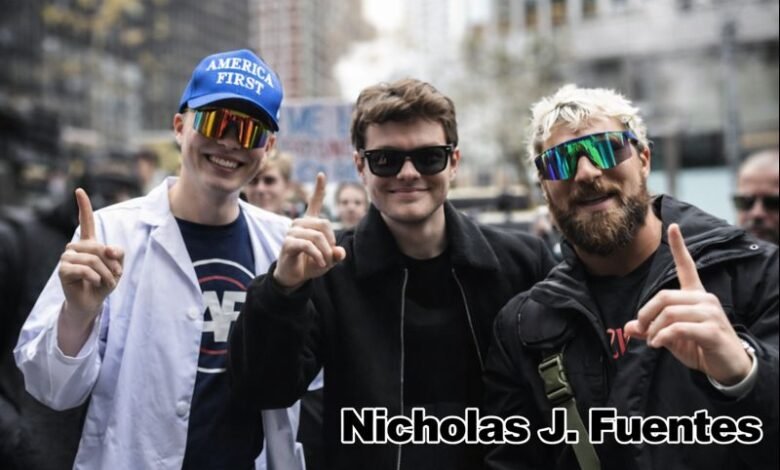
In the realm of modern American politics, few figures are as divisive and controversial as Nicholas J. Fuentes. Known for his unapologetically far-right views, Fuentes has become a symbol of the changing landscape of political extremism, particularly online. His views and rise to prominence have sparked intense debate about the future of American conservatism and the growing influence of digital platforms in shaping political discourse. This article explores the rise of Fuentes, the ideological framework he espouses, and the controversies that have followed him throughout his public life.
The Rise of Nicholas J. Fuentes
Nicholas J. Fuentes made his initial mark on the political scene through his YouTube channel, where he hosted the popular show “America First.” Born in 1998, Fuentes’ early life and academic career gave little indication of the political firestorm he would later ignite. A former student at Harvard University, Fuentes dropped out to pursue his political activism full-time, beginning his ascent by critiquing mainstream conservative figures who he felt were insufficiently committed to “America First” ideals.
The term “America First” became central to Fuentes’ ideology, which blends elements of populism, nationalism, and a rejection of the political establishment. Fuentes attracted a following, particularly among young conservatives, through his charismatic delivery and bold stance on topics like immigration, American sovereignty, and the preservation of Western civilization. As his online audience grew, Fuentes positioned himself as a leader of a new wave of conservative thought—one that sought to distance itself from traditional Republicans and take a more aggressive, populist stance.
Core Ideological Beliefs: Nationalism and Traditionalism
At the heart of Nicholas J. Fuentes’ political beliefs is a strong commitment to nationalism. He advocates for a political and cultural return to what he perceives as traditional American values, emphasizing a need for strict border control, national sovereignty, and the rejection of globalism. Fuentes’ opposition to immigration is rooted in his belief that the demographic makeup of the United States must be preserved in line with its “traditional” cultural identity.
This cultural traditionalism is also evident in Fuentes’ stance on social issues. He strongly opposes progressive movements related to gender equality, LGBTQ+ rights, and feminism. Fuentes argues that these movements have undermined the social fabric of American society, asserting that a return to more traditional gender roles and family structures is essential for the nation’s stability.
On the topic of foreign policy, Fuentes’ ideology includes a critique of American interventionism abroad. He opposes what he considers unnecessary military conflicts and advocates for a more isolationist approach to foreign relations. For Fuentes, international cooperation through organizations like the United Nations only weakens the United States’ ability to act in its own interests, and he believes that globalism threatens American autonomy.
The Role of Social Media in Fuentes’ Influence
One of the most significant aspects of Fuentes’ rise to prominence is the role that social media and digital platforms have played in amplifying his voice. Fueled by a sense of alienation from mainstream political discourse, Fuentes used platforms like YouTube and Twitter to bypass traditional gatekeepers of media and connect directly with his audience.
Fuentes’ use of social media enabled him to cultivate a loyal following, particularly among younger conservatives who felt that traditional media had abandoned their concerns. However, this same social media presence also made him a target of backlash. His rhetoric, often deemed as inflammatory, led to multiple bans from mainstream platforms. Despite these obstacles, Fuentes found alternative channels, including Telegram and Rumble, to maintain communication with his followers.
In many ways, Fuentes represents a new breed of political influencer—one who thrives in the decentralized, less regulated world of social media. His ability to adapt to different platforms and continue building his base demonstrates the power and potential dangers of online political movements.
Controversies Surrounding Nicholas J. Fuentes
Nicholas J. Fuentes is no stranger to controversy. His public persona is heavily shaped by the accusations and criticisms leveled against him for his views on race, immigration, and societal values. Perhaps the most significant controversy revolves around accusations of white nationalism. While Fuentes consistently denies identifying as a white nationalist, many of his critics point to his rhetoric, which often touches on racial purity and cultural preservation, as evidence of his alignment with white nationalist ideologies.
Fuentes’ involvement in the aftermath of the 2017 Charlottesville rally, which was marked by violence and white nationalist demonstrations, further fueled these accusations. Though Fuentes did not attend the rally, his alignment with the broader alt-right movement and the controversial ideologies that permeated it has caused many to associate him with extremism.
Additionally, Fuentes’ promotion of baseless claims about the 2020 U.S. presidential election has added to his notoriety. He has been an outspoken advocate of the idea that the election was stolen from Donald Trump, despite a lack of credible evidence to support such claims. This stance has earned him significant criticism, especially from those who view it as a form of disinformation that undermines the democratic process.
Fuentes’ Influence on the Political Landscape
Despite the numerous controversies and setbacks, Nicholas J. Fuentes has undeniably influenced the political landscape in America. His ideology and digital reach have shaped the conversation among a segment of the population, particularly those who feel marginalized or alienated by traditional political elites. Fuentes’ anti-globalist, anti-immigrant, and traditionalist views have resonated with many who are dissatisfied with the direction of mainstream conservatism.
Although Fuentes’ influence is concentrated mainly among fringe groups, his ability to capture the attention of young conservatives highlights a generational shift in the way political movements are built and spread. Whether Fuentes will maintain his relevance in the broader political discourse remains to be seen, but it’s clear that he has made a significant impact on the direction of far-right politics in America.
Conclusion
In conclusion, Nicholas J. Fuentes remains a figure of significant controversy and influence in contemporary American politics. His rise from a YouTube commentator to a polarizing voice in the far-right movement underscores the power of social media in shaping political narratives and mobilizing grassroots movements. While his views have earned him both fervent supporters and vocal critics, Fuentes’ story highlights the changing dynamics of political engagement in the digital age.
As we continue to navigate the complexities of modern politics, understanding figures like Nicholas J. Fuentes becomes essential for anyone seeking to comprehend the forces shaping our political future. For more on these topics and more, be sure to visit Techmagzin, where we offer in-depth analysis and coverage of the latest in technology and political discourse.
FAQs
1. Who is Nicholas J. Fuentes?
Nicholas J. Fuentes is a far-right political commentator known for his outspoken views on nationalism, immigration, and traditionalism. He is the host of the “America First” podcast and has gained significant attention for his controversial rhetoric.
2. What are Fuentes’ core political beliefs?
Fuentes advocates for strict immigration policies, the preservation of traditional American values, and an opposition to globalism. He also supports a nationalist vision for the country and opposes progressive social movements.
3. Why is Nicholas J. Fuentes considered controversial?
Fuentes is controversial due to his comments on race, his alignment with the alt-right, and his promotion of election fraud conspiracy theories. His rhetoric has led to accusations of white nationalism and extremism.
4. How has Fuentes used social media to spread his views?
Fuentes has leveraged platforms like YouTube, Twitter, and Telegram to build a following and spread his political ideology, bypassing traditional media channels and reaching young conservatives directly.
5. Has Fuentes been involved in any significant political events?
Yes, Fuentes’ views and actions have been associated with the aftermath of the 2017 Charlottesville rally and his promotion of the false claim that the 2020 election was stolen from Donald Trump. These events have significantly shaped his public image.