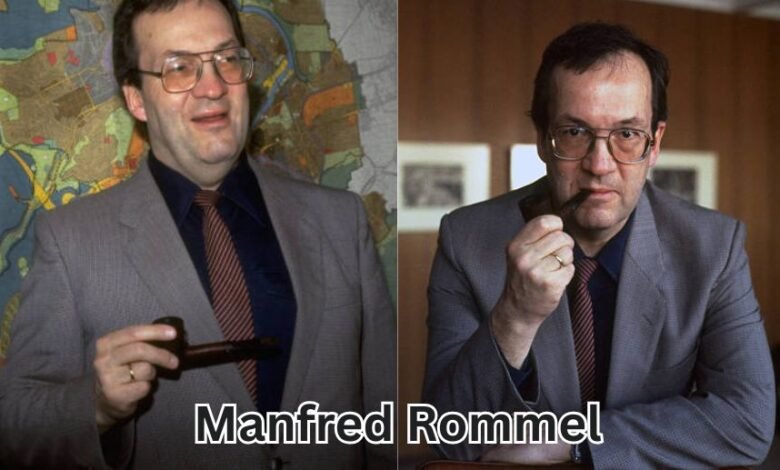
Manfred Rommel, a towering figure in post-war German politics, is remembered not only as the son of World War II General Erwin Rommel but also as a visionary leader who left an indelible mark on Stuttgart and German society. Unlike many who live under the weight of a famous parent, Manfred Rommel carved his own path, becoming a politician celebrated for his pragmatism, humanism, and unwavering commitment to civic responsibility. His story is one of leadership, empathy, and forward-thinking governance.
Early Life and Formative Years
Born on December 24, 1928, in Stuttgart, Germany, Manfred Rommel grew up during a time of intense upheaval. Being the son of Erwin Rommel, the legendary “Desert Fox,” brought both public attention and personal pressure. While his father was a symbol of military brilliance, young Manfred’s ambitions leaned towards law, public service, and creating a society built on dialogue rather than division.
Rommel pursued legal studies at the University of Tübingen, a decision that reflected his desire to understand justice, governance, and the frameworks necessary for a democratic society. His early life experiences, particularly witnessing Germany’s post-war reconstruction, profoundly shaped his political philosophy—one grounded in tolerance, inclusivity, and practical problem-solving.
Political Career: Transforming Stuttgart
Manfred Rommel’s most notable role came in 1974 when he became the Lord Mayor of Stuttgart, a position he held for over two decades until 1996. Under his leadership, Stuttgart evolved from a regional city into a model of modern urban development. Rommel’s governance was characterized by a balance of economic growth and social welfare, with projects spanning infrastructure improvement, environmental sustainability, and support for arts and education.
What set Rommel apart from many politicians was his hands-on approach. He frequently engaged with residents, listened to their concerns, and sought to implement solutions that truly reflected the community’s needs. This personal connection fostered widespread trust and respect, making him one of the most admired figures in German politics.
Champion of Human Rights and Tolerance
Manfred Rommel’s legacy extends far beyond administrative achievements. He was a vocal advocate for tolerance, equality, and the integration of immigrants into German society. Long before these topics became central to political discourse, Rommel recognized the importance of embracing diversity as a strength rather than a challenge.
He spoke openly against discrimination and extremism, believing that the vitality of any city or nation depends on its ability to unite people from different backgrounds. This progressive stance distinguished him from many of his contemporaries and earned him international recognition as a forward-thinking leader who prioritized human dignity alongside governance.
A Politician with Wit and Approachability
Rommel was not only respected for his policies but also for his personal qualities. Known for his sharp wit and approachable demeanor, he had an extraordinary ability to connect with people from all walks of life. Citizens often recalled his down-to-earth conversations and willingness to address problems personally.
This combination of intellect, empathy, and humility made Rommel an unusual politician—someone who wielded influence without arrogance. He understood that leadership is not merely about power or recognition but about service, collaboration, and listening.
Influence on National and International Politics
While his primary focus was Stuttgart, Manfred Rommel’s vision reached beyond local governance. He played a role in shaping discussions about Germany’s post-war identity, reconciliation, and European cooperation. Rommel advocated for an honest confrontation with history and promoted policies that encouraged dialogue and mutual understanding.
He also recognized the importance of international collaboration in building peace. By emphasizing diplomacy and cultural exchange, Rommel contributed to fostering stronger ties between Germany and its European neighbors. His balanced approach to both local and global issues made him a model of thoughtful, ethical leadership.
Legacy and Enduring Impact
Manfred Rommel passed away on November 7, 2013, leaving behind a legacy of integrity, empathy, and civic excellence. Stuttgart, the city he guided for more than two decades, still reflects the principles he championed: inclusivity, innovation, and sustainable growth.
More than a politician, Rommel was a statesman whose influence extended into the hearts of those he served. His life demonstrates how a leader can honor a storied family legacy while forging a path defined by personal values, social responsibility, and an unwavering commitment to justice.
Conclusion
Manfred Rommel’s life stands as a powerful example of principled leadership shaped by responsibility rather than reputation. While history often remembers him in connection with his famous father, Rommel proved through decades of public service that his own values, vision, and integrity defined his legacy. As the long-serving mayor of Stuttgart, he demonstrated how thoughtful governance, openness to change, and respect for human dignity can transform a city and inspire trust among its people.
His commitment to tolerance, democratic values, and honest dialogue remains especially relevant in today’s political climate. Manfred Rommel showed that true leadership is not about commanding authority, but about listening, uniting, and guiding society toward progress. His influence continues to be felt in German political culture and urban governance. At Techmagzin, we recognize Manfred Rommel as a leader whose life offers enduring lessons in responsibility, empathy, and civic courage.